
IAS Council
The Council of the Institute for Advanced Studies consists of the Director and the Deputy Director of the Institute, as well as senior academic staff representing various disciplines.
Tasks of the Council of the Institute for Advanced Studies
-
advising on the development of the organizational framework of the Institute;
-
providing opinions on the allocation of financial resources for the programs carried out by the Institute;
-
evaluating the academic quality and feasibility of innovative research projects proposed for support by the Institute at the University of Warsaw.
Chair of the IAS Council
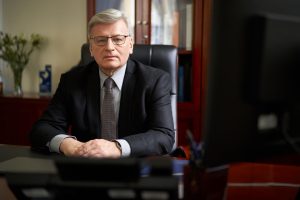
Prof. Dr. habil. Zygmunt Lalak is a physicist whose research interests focus on the physics of fundamental interactions and particle cosmology. He has worked at leading international research centers, including CERN (Switzerland), the University of Oxford (United Kingdom), the University of Pennsylvania (USA), as well as the Technical University of Munich and the University of Bonn (Germany). He is the author of over 120 scientific publications in international journals.
He is a graduate of the Faculty of Technical Physics and Applied Mathematics at the Warsaw University of Technology. His academic career has been associated with the Faculty of Physics at the University of Warsaw, where he obtained his PhD in physics in 1990 and his habilitation degree in 1999. He was awarded the title of Professor of Physical Sciences in 2008.
In the 2016–2020 term, he served as Vice-Dean for Research and Development at the Faculty of Physics of the University of Warsaw and was the first Chair of the Scientific Council for the Discipline of Physical Sciences at the University of Warsaw. Since 2020, he has been the head of the “Excellence Initiative – Research University” programme.
In the 2020–2024 and 2024–2028 terms, Prof. Zygmunt Lalak serves as Vice-Rector for Research, and since 2026 he has also held the position of Director of the Institute for Advanced Studies.
Council Members
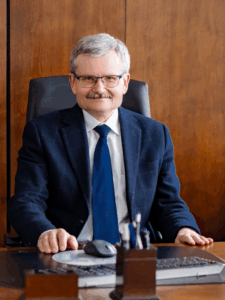
Prof. Dr. habil. Dariusz Wasik is a physicist whose research focuses on the experimental study of electrical, magnetic, and optical (infrared) properties of semiconductor nanostructures. He collaborates with numerous research centers and has completed several international research stays, including at Université Paris 6 (now a part of Sorbonne Université) and École Polytechnique in Palaiseau, France. He is the co-author of nearly 100 scientific publications in international journals and two academic textbooks.
His entire academic career has been associated with the University of Warsaw, where he obtained his PhD in 1991 and his habilitation degree in 2002. He was awarded the title of Professor of Physical Sciences in 2014.
From 2016 to 2024, he served as Dean of the Faculty of Physics at the University of Warsaw. He currently chairs the Rector’s Committee for Appointments to Professorial Positions at the University of Warsaw and is a member of the Advisory Team for Research Infrastructure at the Ministry of Science and Higher Education.

Prof. Dr. habil. Łukasz Dziewit is an environmental microbiologist and geneticist affiliated with the Faculty of Biology at the University of Warsaw throughout his academic career. He heads the Laboratory of Applied Microbial Ecology. He is the author and co-author of over 90 scientific publications (including in journals such as Nature Microbiology, Nature Communications, ISME Journal, and Water Research), 6 book chapters, and co-author of 7 patents. He has been involved in more than 30 national and international research projects (NCN, NCBR, MNiSW, FNP, Horizon Europe), serving as principal investigator, scientific supervisor, and team member. He also reviews research proposals and scientific publications for numerous international journals.
He has supervised 8 PhD graduates, with several more doctoral candidates currently under his supervision. In 2019, he received a team award from the Minister of Science and Higher Education for implementation activities, and in 2015 he was awarded a scholarship for outstanding young scientists.
His research interests combine environmental microbiology, molecular ecology, and microbial biotechnology. His main research areas include environmental biomonitoring, with a particular focus on pathogenic bacteria and resistance genes, as well as the bioprospecting of extreme environments for applications in environmental biotechnology and regenerative agriculture. He also develops novel tools for (meta)genomic and bioinformatic analyses.
More information: Laboratory of Applied Microbial Ecology

Dr. habil. Aneta Gawkowska, Associate Professor at the University of Warsaw, is a sociologist at the Institute of Applied Social Sciences, Faculty of Applied Social Sciences and Resocialization, University of Warsaw, whose research interests include classical and contemporary sociological theories as well as issues of sex/gender and community. She was a fellow at the Institute for Human Sciences in Vienna (Austria) and the University of Notre Dame (USA), where she taught the course “Social Theory and New Feminism”. She is the author of the books Biorąc wspólnotę poważnie? Komunitarystyczne krytyki liberalizmu (2004), Taking Community Seriously? Communitarian Critiques of Liberalism (2011), Skandal i ekstaza. Nowy Feminizm na tle koncepcji pojednania według Jana Pawła II (2015), as well as numerous academic and popular articles on communitarianism, new feminism, sexuality, and reconciliation. She co-edited (with P. Gliński and A. Kościański) the book Teorie wspólnotowe a praktyka społeczna: Obywatelskość, polityka, lokalność (2005) and served as a consultant for Polish editions of books on new feminism and the philosophy and theology of sexuality within her expert work for The Centre for Thought of John Paul II in Warsaw (2007-2012).
In the 2016-2020 term she served as Vice-Dean for Research at the Faculty of Applied Social Sciences and Resocialisation (WSNSiR). Since 2020, she has been Dean WSNSiR and a University of Warsaw Senator (2020-2028), serving as a member of the Senate Committee on Financial Affairs in the 2020-2024 and 2024-2028 terms, and since 2024 as Chair of the Senate Committee on Personnel Policy.
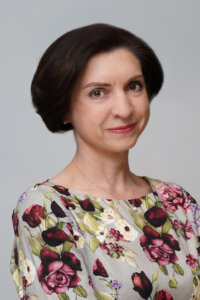
Dr. habil. Gabriela Grotkowska, Associate Professor at the University of Warsaw, is an economist affiliated with the Faculty of Economic Sciences at the University of Warsaw, where she has served as Dean since 2020. She specializes in labour economics, the economics of education, and the analysis of links between international trade and employment. She graduated summa cum laude from the University of Warsaw, obtained her PhD with distinction in 2008, and her habilitation degree in 2018.
She has extensive research and international experience, including a Marie Curie fellowship at the University of Nottingham. She is the author of nearly one hundred scientific publications and has led numerous research projects funded by national and international sources. She also collaborates with public administration, providing economic analyses and policy recommendations, particularly in the areas of the labour market and education systems.
She is actively engaged in teaching, delivering courses in both Polish and English on macroeconomics, labour economics, and international economics, and supervising doctoral students. From 2014 to 2020, she headed the Labour Market Research Centre at the Faculty of Economic Sciences, University of Warsaw.
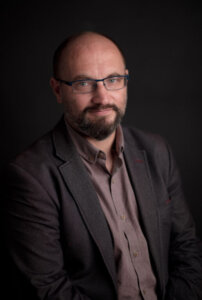
Dr. habil. Bartosz Kontny, University Professor, is Dean of the Faculty of Archaeology. He specializes in the archaeology of the Protohistoric period in Barbarian Europe, with particular emphasis on weaponry. His research also includes underwater archaeology and the history of shipbuilding. He leads fieldwork projects at sites such as Lake Lubanowo, Lake Hammersø on Bornholm, and serves as the head of underwater research in the archaeological project in the area of the ancient city of Ptolemais in Libya.
He is the author of over 180 scientific publications and the editor of several volumes. His most important books include Archaeology of War. Studies on Weapons of Barbarian Europe in the Roman and Migration Period (2023), The West Balt Circle Riders. Spurs and their Role in the Bogaczewo and Sudovian Cultures (2025), and Nowinka Site 1. The Cemetery from the Late Migration Period in Northern Poland (2011, co-authored with J. Okulicz-Kozaryn and M. Pietrzak).
He has been a certified KDP/CMAS diver since 1987 and an M2 instructor since 1992.

Prof. Dr. habil. Andrzej Kudelski is a chemist affiliated with the University of Warsaw since 1990. He studied there, obtained his PhD in 1996, and his habilitation degree in 2004. He spent nearly three years as a postdoctoral researcher at the Fritz Haber Institute of the Max Planck Society in Berlin.
Professor Kudelski’s main research interests focus on spectroscopic measurements using electromagnetic nanoresonators. He is the author of over 150 scientific publications in international journals. He has supervised eight PhD dissertations and has led numerous research projects, including six OPUS grants funded by the National Science Centre (NCN).
In the years 2008 to 2016 he served as Vice-Dean for Student Affairs and from 2016–2024 as Dean of the Faculty of Chemistry at the University of Warsaw.
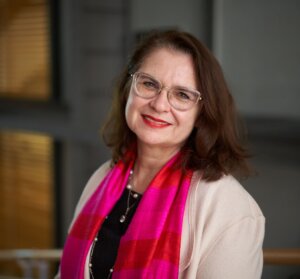
Dr. habil. Monika Rekowska, Associate Professor at the University of Warsaw is a graduate of archaeology at the Institute of Archaeology, University of Warsaw. She gained fieldwork experience at archaeological sites in France, Switzerland, Germany, Italy, Libya, and Cyprus. Her research interests include classical archaeology, its history and role in European culture, as well as the history of travel, collecting, and early scientific inquiry.
Her research focuses, among other topics, on ancient residential architecture in the cities of Cyrenaica and Cyprus, analyzed in terms of construction, spatial organization, and decoration. She currently leads the NCN OPUS project In Search of the Lost Temple. The Sacred (?) Landscape of the Hinterland of the Sanctuary of Apollo Hylates at Kourion (Cyprus).
Since 2020, she has been affiliated with the Institute of Art History at the Faculty of Culture and Arts, University of Warsaw, where she heads the Department of Cultural History. In 2021, she was appointed Director of the Doctoral School of Humanities, a position she currently holds for a second term. She is a member of the Commission on Mediterranean Archaeology of the Polish Academy of Arts and Sciences, the Scientific Council of the Institute of Mediterranean and Oriental Cultures, and several international archaeological associations.

Prof. Dr. habil. Anna Szuster-Kowalewicz, Professor of Social Sciences, is affiliated with the Faculty of Psychology at the University of Warsaw, where she heads the Department of Social Psychology, Personality, and Emotional Processes. She serves as Vice-Dean for Research and is a member of the Rector’s Committee for Professorial Promotions. She is a member of the European Association of Social Psychology and a founding member of both the Polish Social Psychology Society (Polskie Towarzystwo Psychologii Społecznej) and the Polish Association for Personality and Individual Differences (Polskie Stowarzyszenie Psychologii Osobowości i Różnic Indywidualnych).
She teaches social psychology. Her research focuses on the determinants of human altruism, as well as the mechanisms of empathy and perspective-taking. She co-developed an educational and prevention program aimed at reducing cyberbullying among adolescents, designed and tested within an interdisciplinary applied grant funded by the National Centre for Research and Development (NCBR). Her current work examines the impact of the digital environment on various aspects of social functioning.
She is the author of books and scientific articles published in journals such as Frontiers, New Ideas in Psychology, Cyberpsychology, Behavior and Social Networking, and Journal of Community & Applied Social Psychology. She has received the Rector of the University of Warsaw Award for her publication achievements.
She collaborates internationally, participating in projects funded by the Czech Science Foundation and working with researchers from Tel Aviv University and Université Paris Descartes.