

Natural history collections in the age of artificial intelligence
08 06 2026
Category: Publications
A new article, led by Dr. Kamil E. Frankiewicz from the University of Warsaw Herbarium, a unit of the Faculty of Biology and a research group at Biological and Chemical Research Centre of the University of Warsaw, addresses ethical issues in collectomics.
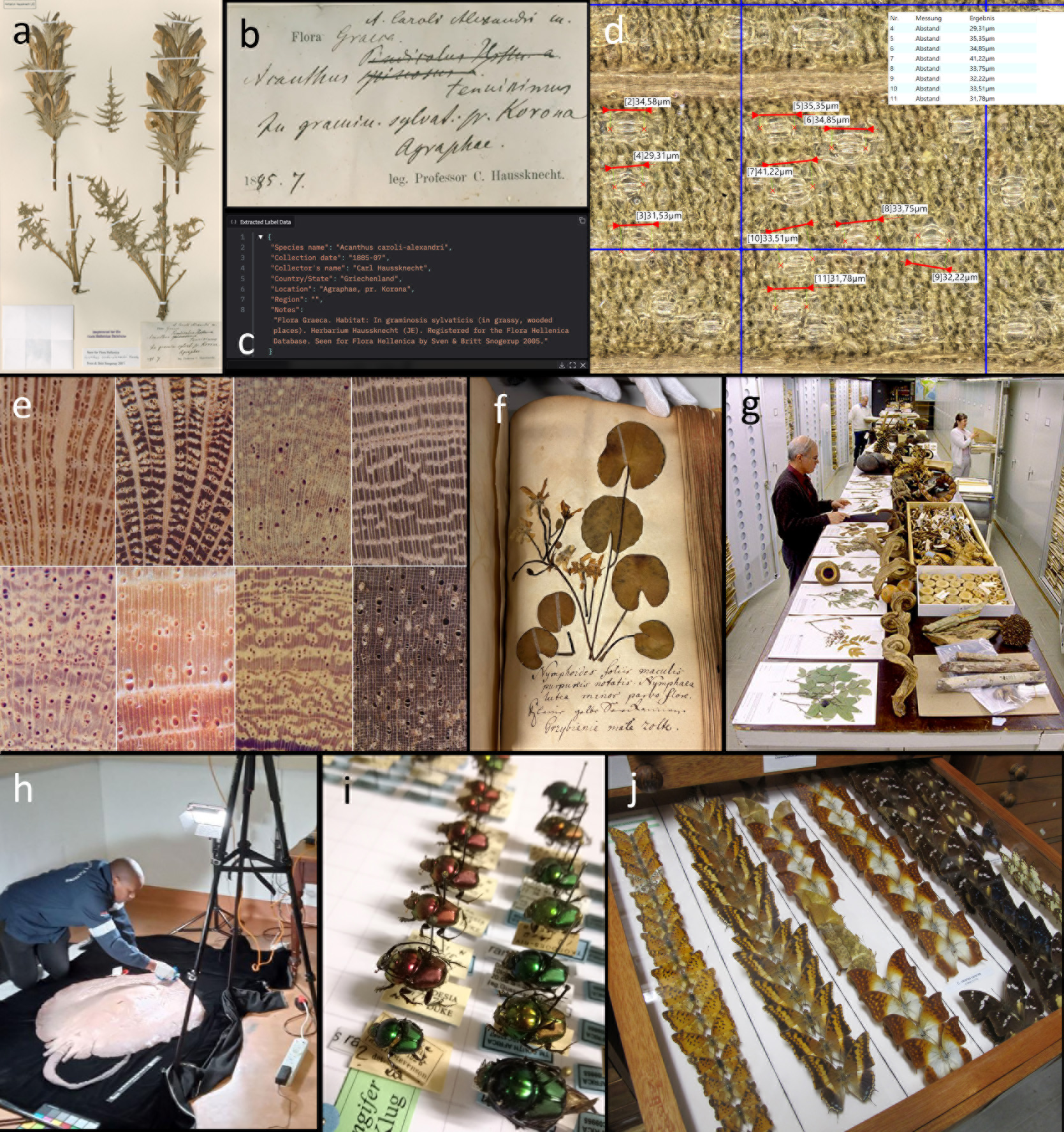
Collectomics is a rapidly developing field of research based on data from specimens held in herbaria, museums, and other natural history collections. Thanks to the mass digitization of specimens and the use of artificial intelligence methods, data from dispersed collections can be integrated and processed on an unprecedented scale. These data make it possible, among other things, to assess how species’ ranges and the composition of entire ecosystems are changing, how human pressure influences species evolution, and how limited funds for nature conservation can be used most effectively. At first glance, it may therefore seem that collectomics has only positive aspects. However, few people realize that it also raises ethical dilemmas.
Many collections were created in the context of colonialism, the exploitation of local communities, or unequal access to scientific resources. Using such collections without the involvement of the communities from which they originate, for example by excluding researchers from the country of origin of a specimen, or without historical context, perpetuates ethically questionable practices known from the past. The authors emphasize that if source data are incomplete, shaped by historical inequalities, or obtained without proper context, errors may be reproduced by AI tools on a large scale. On the other hand, as the authors note, when collection data can contribute to a better understanding and protection of nature, or to the welfare of humans and other organisms, failing to use them is also ethically indefensible.
The article is a “science policy” paper, meaning that it presents clear guidelines for different groups of stakeholders — collection staff and curators, researchers, and science funding institutions — to help them avoid mistakes known from the past while ensuring the long-term safety and usefulness of natural history collections, which constitute a shared heritage of humanity.
The article, “Ethical collectomics: A guide to the responsible and fair mobilization of natural history collections”, was published in BioScience. The work is the result of an international collaboration between researchers from Europe, the Americas, and Africa, and was inspired by discussions held during the conference “Collectomics—Ethical mobilization of Natural History Collections for Biodiversity Research,” organized at the University of Warsaw in November 2025.
Image source: the article “Ethical collectomics: A guide to the responsible and fair mobilization of natural history collections”.